 by Aleks
How Modern Behaviour is Reshaping Brand Activation
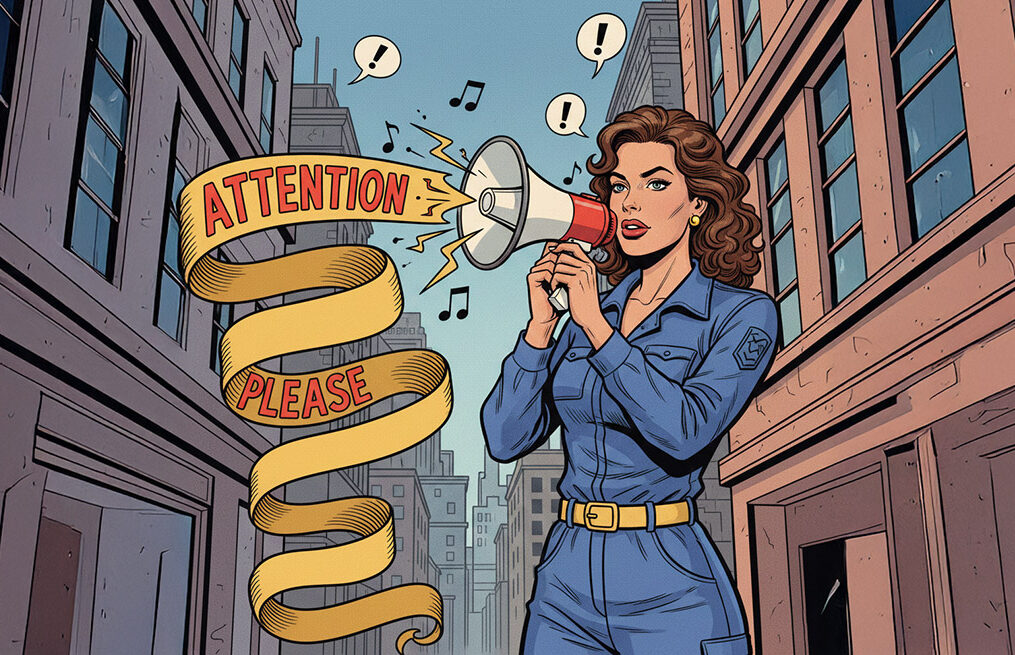
Attention spans haven’t disappeared. They’ve become selective. People don’t struggle to focus, they struggle to tolerate irrelevance. In the modern age, audiences process more information than ever, faster than ever, and with far less patience for noise. This shift isn’t killing branding. It’s forcing it to grow up.
Brands that understand how attention really works today are winning. Brands that don’t, are shouting louder and being ignored faster.
Attention is no longer given. It’s earned instantly
People decide whether something matters in seconds, sometimes milliseconds. The first visual, the first line, the first movement determines whether attention continues or disappears.
This means brand activation can’t warm up slowly anymore. There is no runway. No long intro. No build-up. The value has to be visible immediately.
Strong brands lead with clarity. Weak brands lead with explanations.
Information absorption has changed, not declined
People absorb information differently now. They scan. They filter. They connect dots subconsciously. Long-form content still works, but only when the entry point is sharp and the structure respects cognitive load.
This is why modular storytelling wins. Clear headlines. Strong hierarchy. Visual cues. Repetition of core ideas. Brands that design information for how people consume, not how they wish they consumed, stay relevant.
Complexity isn’t impressive anymore. Precision is.
Detail still matters, but only after relevance is proven
Attention to detail hasn’t disappeared. It’s been delayed.
People don’t start by caring about craftsmanship, nuance, or depth. They earn their way there. Once relevance is established, detail becomes the trust builder. This is where strong brands separate themselves from shortcuts and surface-level tactics.
Brands that skip detail look careless.
Brands that lead with detail before relevance look out of touch.
Sequence matters.
How this is changing brand activation
Brand activation today is designed for interruption, not immersion. It must work in fragments, on screens, in motion, in passing moments.
This is why:
- campaigns are built in layers, not single executions
- messaging is simplified without becoming shallow
- visuals carry meaning faster than copy
- consistency matters more than cleverness
Strong activations don’t try to say everything. They say one thing clearly and repeat it relentlessly across touchpoints.
Speed exposes weak thinking
Fast attention cycles punish brands with unclear positioning. If your brand can’t be understood quickly, it won’t be understood at all.
This is forcing brands to sharpen their core message. No filler. No internal jargon disguised as storytelling.
The brands that win today can answer three questions instantly:
Who are you?
Why do you matter?
Why now?
Technology amplifies both good and bad branding
Algorithms reward engagement, not intention. This means strong branding scales faster, but weak branding collapses faster too.
A good idea travels. A bad one gets exposed. There’s nowhere to hide behind budget or frequency anymore. Behaviour reveals truth.
Brand activation today is a stress test. Only clarity survives.
The role of brand discipline in a short-attention world
Short attention doesn’t mean sloppy branding. It demands stricter discipline.
Strong brands maintain:
- tight visual systems
- recognisable cues
- repeatable formats
- clear tone of voice
This allows them to move fast without losing identity. Flexibility without dilution is the new standard.
So, just to wrap up
People haven’t lost the ability to pay attention. They’ve lost patience for brands that don’t respect their time.
Modern brand activation is about earning attention quickly, delivering value immediately, and proving credibility through consistency and detail over time. Brands that adapt to this reality don’t chase attention, they command it.